May. 20, 2003


Toyota Group Announces Plan for EXPO 2005 Pavilion
NAGOYA―THE TOYOTA GROUP announced today it will present ideas for the future of transportation and other technologies and spotlight the increasing role of recycling in society at its pavilion*1 at the 2005 World Exposition, Aichi, Japan (EXPO 2005)*2.
Under the banner “The Dream, Joy and Inspiration of Mobility in the 21st Century”, the Toyota Group’s pavilion―which will be largely created and operated using renewable resources―will encompass two themes: “Mobility in Harmony with the Planet” (based on EXPO 2005’s “Nature’s Wisdom” theme) and “The Appeal of Mobility―The Dream and Joy of Worldwide Movement” (based on the exposition’s “Grand Intercultural Symphony” operational concept).
Planned features include a “Mobility Performance Show” and a highly recyclable pavilion that will largely run on renewable energy. Visitors will be treated to an IT-based interactive experience and site management characterized by wholehearted hospitality. Ways to present future technologies for the environment and other fields based on Toyota Group know-how are also being considered.
Mobility Performance Show
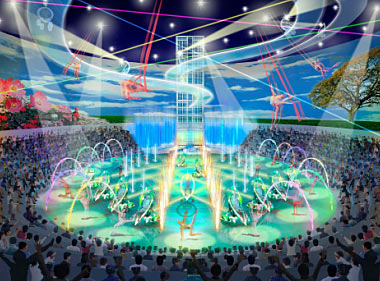
The Mobility Performance Show, arranged by famed producer Yves Pépin of France, will feature the i-unit concept vehicle and other attractions in a highly entertaining presentation of a world full of future technologies and futuristic vehicles. Meant to appeal to visitors of all ages, it will aim to hint at what may be in store for society.
The pavilion―showcasing the recycling mechanism of nature
The pavilion will be designed to demonstrate nature’s recycling mechanism. Every effort will be made to achieve carbon dioxide emissions-free operation by relying on renewable energy sources (mainly wind power) and to use renewable and reusable materials in its construction. Aiming for zero waste even after dismantlement, non-reusable materials will be exhaustively recycled.
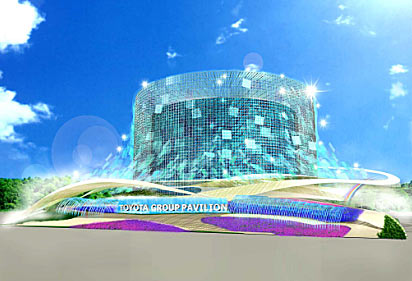
The pavilion’s exterior design employs a complex application of reusable and easily recycled steel and natural materials. Water and flowers are used to help create the image of a hill―with a path leading up to it―enveloped by a natural and gentle light. Its basic design was commissioned to MIKAN, a Tokyo architectural firm.
For details on the i-unit concept vehicle, the Mobility Performance Show, producer Yves Pépin, the Earth Pavilion and the pavilion’s architects, please see attachments 1 through 5.
*1The following 17 companies are scheduled to participate in the Toyota Group pavilion: Toyota Industries Corporation; Toyota Motor Corporation; Aichi Steel Corporation; Toyoda Machine Works, Ltd.; Toyota Auto Body, Co., Ltd.; Toyota Tsusho Corporation; Aisin Seiki Co., Ltd.; Denso Corporation; Toyoda Boshoku Corporation; Towa Real Estate Co., Ltd.; Toyota Central Research & Development Laboratories, Inc.; Kanto Auto Works, Ltd.; Toyoda Gosei Co., Ltd.; Hino Motors, Ltd.; Daihatsu Motors, Ltd.; Tokai Rika Co., Ltd.; and Araco Corporation.
*2 March 25 to Sept. 25, 2005 in Aichi Prefecture’s Seto City, Nagakute Town and Toyota City
Under the banner “The Dream, Joy and Inspiration of Mobility in the 21st Century”, the Toyota Group’s pavilion―which will be largely created and operated using renewable resources―will encompass two themes: “Mobility in Harmony with the Planet” (based on EXPO 2005’s “Nature’s Wisdom” theme) and “The Appeal of Mobility―The Dream and Joy of Worldwide Movement” (based on the exposition’s “Grand Intercultural Symphony” operational concept).
Planned features include a “Mobility Performance Show” and a highly recyclable pavilion that will largely run on renewable energy. Visitors will be treated to an IT-based interactive experience and site management characterized by wholehearted hospitality. Ways to present future technologies for the environment and other fields based on Toyota Group know-how are also being considered.
Mobility Performance Show
The Mobility Performance Show, arranged by famed producer Yves Pépin of France, will feature the i-unit concept vehicle and other attractions in a highly entertaining presentation of a world full of future technologies and futuristic vehicles. Meant to appeal to visitors of all ages, it will aim to hint at what may be in store for society.
The pavilion―showcasing the recycling mechanism of nature
The pavilion will be designed to demonstrate nature’s recycling mechanism. Every effort will be made to achieve carbon dioxide emissions-free operation by relying on renewable energy sources (mainly wind power) and to use renewable and reusable materials in its construction. Aiming for zero waste even after dismantlement, non-reusable materials will be exhaustively recycled.
The pavilion’s exterior design employs a complex application of reusable and easily recycled steel and natural materials. Water and flowers are used to help create the image of a hill―with a path leading up to it―enveloped by a natural and gentle light. Its basic design was commissioned to MIKAN, a Tokyo architectural firm.
For details on the i-unit concept vehicle, the Mobility Performance Show, producer Yves Pépin, the Earth Pavilion and the pavilion’s architects, please see attachments 1 through 5.
*1The following 17 companies are scheduled to participate in the Toyota Group pavilion: Toyota Industries Corporation; Toyota Motor Corporation; Aichi Steel Corporation; Toyoda Machine Works, Ltd.; Toyota Auto Body, Co., Ltd.; Toyota Tsusho Corporation; Aisin Seiki Co., Ltd.; Denso Corporation; Toyoda Boshoku Corporation; Towa Real Estate Co., Ltd.; Toyota Central Research & Development Laboratories, Inc.; Kanto Auto Works, Ltd.; Toyoda Gosei Co., Ltd.; Hino Motors, Ltd.; Daihatsu Motors, Ltd.; Tokai Rika Co., Ltd.; and Araco Corporation.
*2 March 25 to Sept. 25, 2005 in Aichi Prefecture’s Seto City, Nagakute Town and Toyota City
Attachment 1
| The i-unit Concept |
| The i-unit concept vehicle aims to “inspire the individual” by serving as a form of mobility that allows the building of a stronger bond between people and the Earth. This bond is the natural result of movement, which creates encounters among nature, society and people and cultivates a sense of belonging with the planet. Envisioned under the concept “Mobility Extending Human Ability”, the one-seater i-unit leaves behind past efforts to make vehicles smaller and focuses, instead, on how well it can harmonize with individuals to extend the boundaries of human possibility. Striving to achieve compatibility between harmony with the Earth, society and the fulfillment of human desire, the i-unit, which represents balance of a higher order through the convergence of accumulated human wisdom and knowledge, is designed to: 1) respond to the human desire to move freely and enjoy driving, 2) create harmony with the social systems of society and 3) offer mobility in harmony with nature and the planet. |
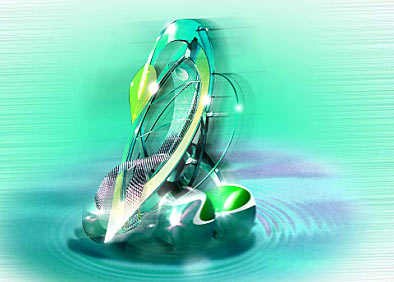 |
| i-unit design concept |
Attachment 2
| Outline of Mobility Performance Show |
| The Mobility Performance Show is planned to be a highly entertaining presentation of future technologies and society with futuristic vehicles―featuring the i-unit concept vehicle and other attractions. The show is designed to spotlight: 1) how movement leads to interesting encounters (with the planet and its creatures, society, people, etc.), 2) the many technologies and vehicles of the future and 3) future society with people and nature in harmony. |
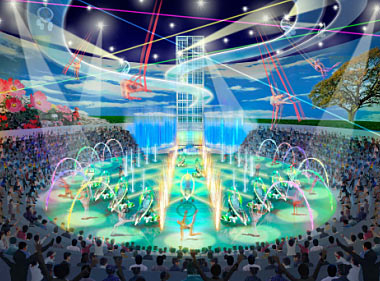 |
| Conceptual image of the Mobility Performance Show |
Attachment 3
| The Pavilion |
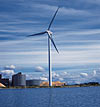
| The pavilion will present a future recycling society in harmony with the mechanisms of the Earth. Specifically, recycling will be implemented exhaustively with active use of renewable energy, renewable materials and re-usable materials, as well as by recycling materials that cannot be reused. Wind power, as a renewable energy source, will be harvested by a wind power generator―rated at 1980 kW, the largest in Japan―that will be installed outside the EXPO 2005 site at Toyota Motor Corporation’s Tahara Plant. The generator is scheduled to begin operation in March 2004 to supply power to the pavilion for the full duration of EXPO 2005*. After EXPO 2005 closes, the generator will continue to produce clean energy to contribute to the reduction of carbon dioxide emissions. Installation and operation of the generator will be entrusted to Windtech Tahara, a wholly owned subsidiary of Toyota Tsusho Corporation. Also, Toyota Motor Corporation plans to expand use of renewable energy in a number of locations around the world and to reflect in its business activities the principles of wind power use. Biodegradable plastic, kenaf and other such materials of the Toyota Group will be used as renewable materials in the pavillion. Also, the Toyota Group plans to effectively use wood from forest thinning activities in the region. |
Outline of wind power generator
|
|
* The actual power supply scheme involves sale of power generated at Tahara Plant to the local power utility (Chubu Electric Power Co., Ltd.) and electric power supply to the pavilion through the utility. Although this is not direct power supply, it is organized as a new method known as mitigation (defined under the US environmental assessment system as “action to mitigate or compensate for negative impact on the environment by human activities”).
Attachment 4
| Exterior Appearance of the Pavilion (Concept) |
| Situated at the top of a gentle slope, the pavilion welcomes visitors with an inviting ambiance. Its exterior, created in the image of a hill, employs a complex application of reusable and easily recycled steel and natural materials. Water and flowers are used to enhance the sense of natural and gentle light that envelops this hill―as well as the path leading to it. The hill, itself, is created by organically connecting the pavilion’s walled surfaces and gently sloping roof, thus linking the pavilion and the surrounding site. The sense of natural and gentle light comes from the refraction and reflection of light passing through exterior panels made of bio-plastic and silk. Its intricately interwoven steel-frame construction gives the pavilion an air of being delicate and gentle. Planned site size for the pavilion is 5,000 square meters, with a total floor space of 3,333 square meters. |
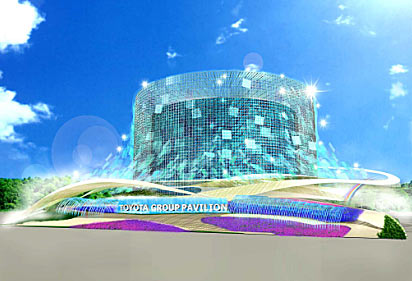 |
| Exterior appearance of the pavilion (conceptual image) |
Attachment 5
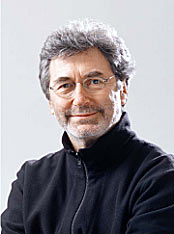
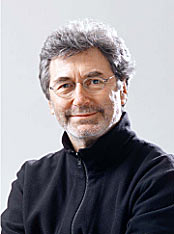 Born in 1943 in France, Yves Pépin is known for producing spectacular, grand-scale fantasies and has successfully executed numerous multimedia and large-scale programs at various global events, expositions and theme parks. He is head of the Paris-based production company ECA2.
His representative works include the opening and closing ceremonies of the 1998 World Cup in France and the 1999-2000 Millennium Celebration spectacle at the Eiffel Tower.
Yves Pépin
His representative works include the opening and closing ceremonies of the 1998 World Cup in France and the 1999-2000 Millennium Celebration spectacle at the Eiffel Tower.
MIKAN

Its representative works include the NHK Nagano Broadcasting Hall, SHIBUYA-AX, cafe@FUTURE, Keio English Garden and others.
Reference
| Outline of the EXPO 2005 Aichi, Japan |
| 1) | Purpose : Proposes new directions for solving the global scale problems confronting humanity in the 21st century. To accomplish this, Japan will hold EXPO 2005 Aichi, Japan registered with the B.I.E. (International Exhibitions Bureau) in December 2000, as a new type of international contribution for this global age. |
| 2) | Title: Official: The 2005 World Exhibition, Aichi, Japan Abbreviated: EXPO 2005, Aichi, Japan Popular name: Exposition of Global Harmony |
| 3) | Theme: “Nature’s Wisdom” Sub-theme “Nature’s Matrix” “Art of Life” “Development for Eco-Communities” |
| 4) | Duration: March 25 through September 25, 2005 ( 185 days) |
| 5) | Location: Aichi Prefecture: Seto City; Nagakute Town; Toyota City (an area of approximately 173 hectares) |
| 6) | Projected number of visitors: 15 million people |
| For further information, please refer to http://www.expo2005.or.jp |