

Jan. 09, 2026
Genki-KûkanTM Research Initiative (Part 6)From Research to Practice - Expanding the Challenge of Genki-KûkanTM Across Departments






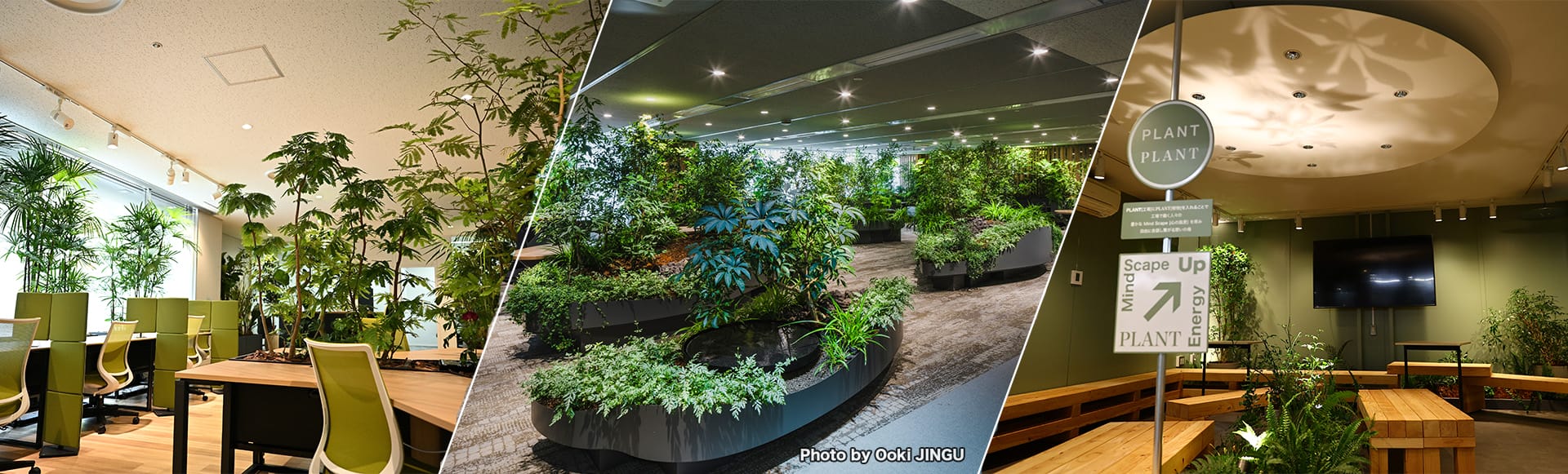
Toyota Motor Corporation (hereafter Toyota) Frontier Research Center and Toyota Central R&D Labs, Inc. (hereafter Toyota Central R&D) have been collaborating on the Genki-KûkanTM Research project aimed at creating spaces that promote both physical and mental well-being*1-5.
In previous series, we presented scientific findings on natural air quality and its psychological and physiological effects.
In this report, we present case studies of introducing Genki-KûkanTM spaces in various internal environments to verify the effectiveness of these insights. Members from different specialized fields explore, from their unique perspectives, the potential of creating these spaces, and challenges aimed at generating new value for future offices and living spaces are shared. Please take a look.
Toyota Kudan Building
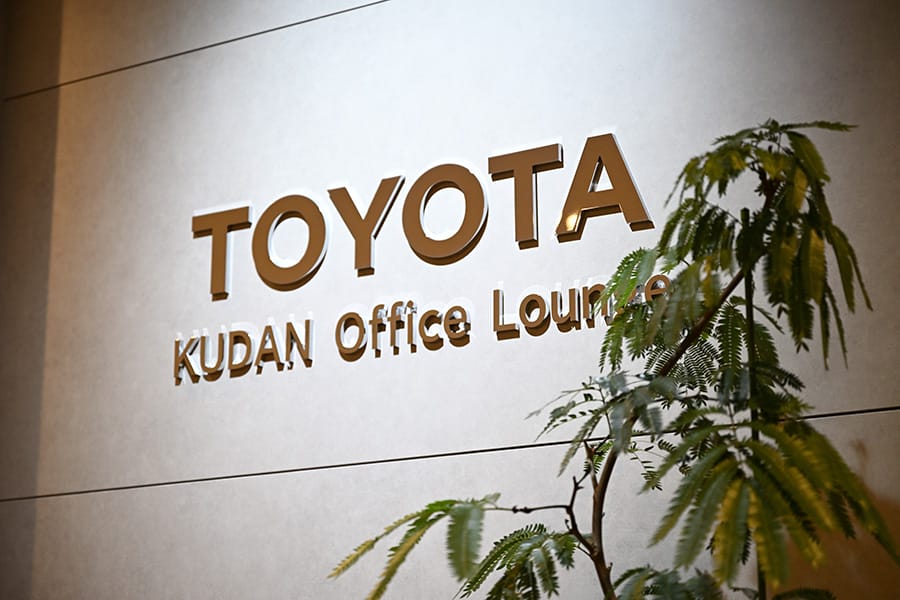
We wanted to create an office lounge at the Kudan Building that incorporates Toyota's technology.
- Could you tell us about the motivation for implementing Genki-KûkanTM?
- Ushida (Group Manager, General Administration Div., Toyota)
- Our office in Otemachi, Tokyo had became too cramped, so we decided to relocate part of it to the Toyota Kudan Building, and that's how the ReBORN project for the offices inside the building got started. We immediately asked employees about what they wanted from the office, and the requests included "a space conducive to concentration," "an open communication area," and "a place where people can truly enjoy working." We then considered creating a space that could meet these needs.
- Was the use of plants planned from the beginning?
- Ushida
- Actually, plants were not initially planned. From past experiences, there was a strong perception among stakeholders that maintaining real plants was difficult. In this situation, the General Manager of the General Administration Div. at that time proposed creating an office that reflects Toyota's research, technology, and services. This proposal triggered discussions about incorporating the results of Genki-KûkanTM Research into the office design. After many discussions, we decided to create an office lounge for interaction with external visitors and to try implementing Genki-KûkanTM into the Well-being zone within the lounge―the first such office in the Tokyo area.
-
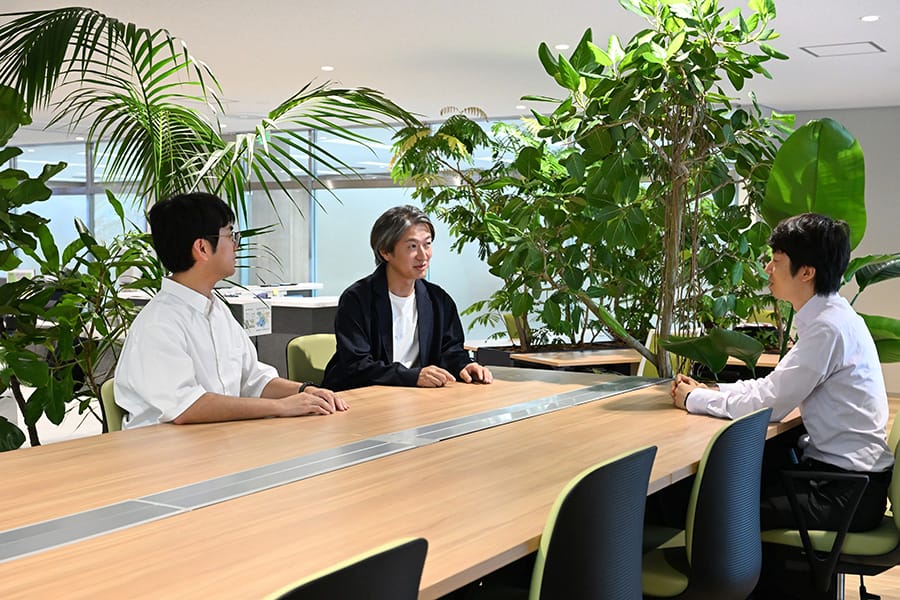
- Men area meeting space
Three Effects Based on Leaf Shapes
- What research results from the Frontier Research Center are featured?
- Ito (Assistant Manager, Frontier Research Center, Toyota)
- The office lounge was intended to allow various ways of working without limiting its use. So, we recreated the effects of the Genki-office research facility at our headquarters in Toyota City, Aichi Prefecture, by dividing the lounge into three zones: 1) an area expected to reduce fatigue with finely shaped leaves (Ten area), 2) an area to improve concentration with elongated leaves (Sen area), and 3) an area to boost vitality with large leaf surfaces (Men area)*1. We also added a water basin to provide the soothing effect of water sounds.
-
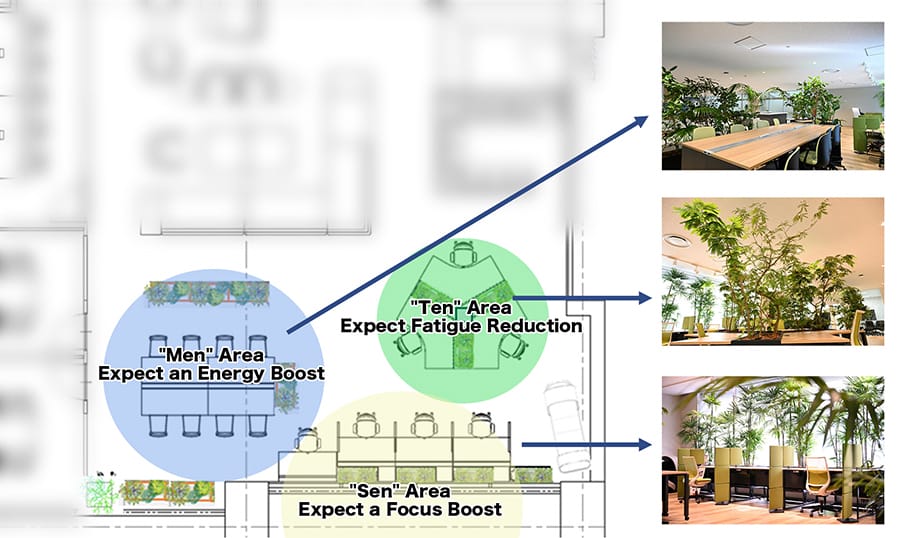
- Layout inside the office lounge
What are the Essential Elements of Genki-KûkanTM?
- To the designers from Park Corporation parkERs (hereafter parkERs), what design points did you focus on?
- Tsujie (Creative Manager, Green Life Division, parkERs)
- Considering the horizontal expansion of research results from the Frontier Research Center within Toyota, we focused on "reproducibility" in coordinating the planting. I was also responsible for the greenery design of Genki-office. To ensure stable reproducibility in various environments, we carefully adjusted tree shapes' orientations, densities, and volumes based on each area's purpose and users' viewpoints. Water plays an important role by adding "movement" to the space, stimulating visual and auditory senses. Water features like waterfalls and basins have become indispensable elements in Genki-KûkanTM spaces.
-
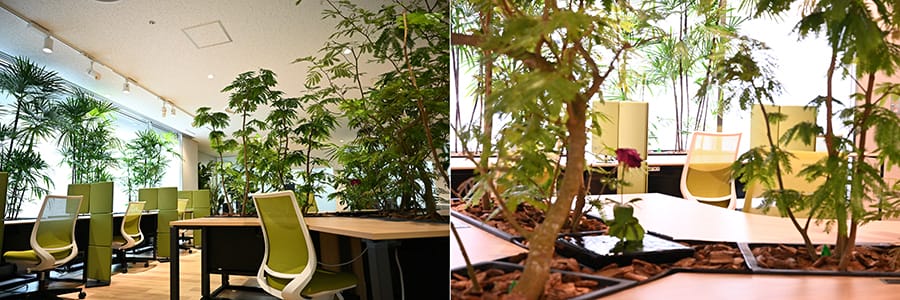
- Photo left: Seating in the Sen and Ten areas
Photo right: Water fixture placed at the center of the Ten area
Real Plants That Bring Joy to Work
- How has the implementation gone?
- Ushida
- When I come to the Kudan Building, I spend almost the entire day in the office lounge. The atmosphere is different from ordinary work floors, providing a good mental refresh. Working surrounded by nature makes me feel less fatigued.
- How have others reacted?
- Ushida
- Since the opening, many people have visited and said the overall atmosphere is nice, calming, and stylish. The presence of real plants especially stands out. The lounge is also used for meetings with external visitors, facilitating conversations between Toyota employees and outsiders. This helps achieve one of our original goals: creating a place where people can truly enjoy working. Additionally, because it gives a softer impression than regular meeting rooms, there have been requests to use it for recruiting and networking events.
- Is there a particularly popular area in Genki-office?
- Ushida
- Currently, usage rates among areas do not differ significantly. Often, after meetings in conference rooms, people move to the "Men" area (an area to boost vitality) to continue discussions, choosing spaces according to mood or situation.
Expectations for Genki-KûkanTM Research
- What are your expectations for Genki-KûkanTM Research?
- Ushida
- We have high hopes for the full-scale implementation of Genki-KûkanTM in the new Tokyo headquarters in 2029. From the implementer's perspective, it would be ideal to have research results that clearly demonstrate effects. Especially regarding productivity improvement, studies where participants work in both regular offices and Genki-KûkanTM to compare effects would make it easier to adopt Genki-KûkanTM in the future.
-
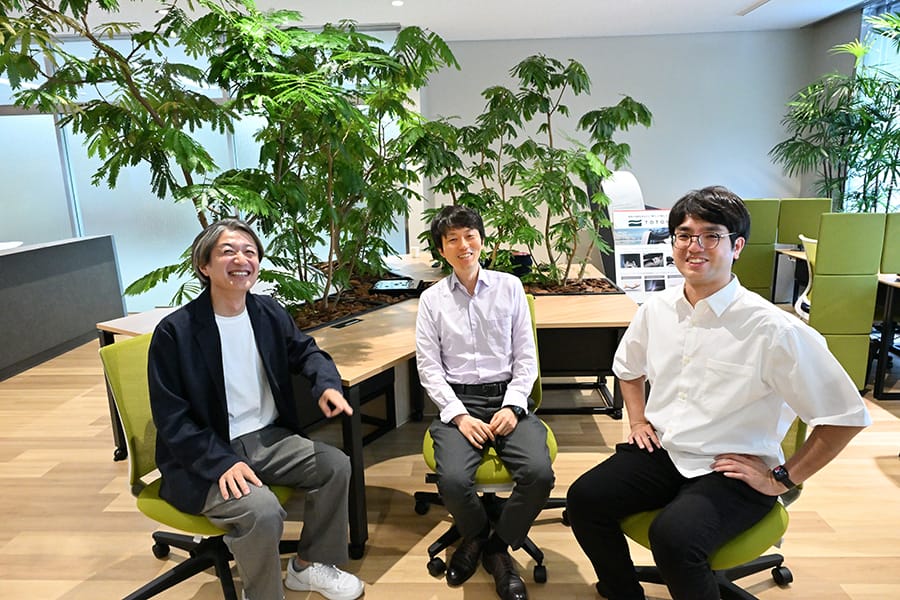
- From left:
Takeshi Tsujie, Creative Manager, Green Life Division, parkERs
Hiroki Ushida, Group Manager, Tokyo Administration Dept. General Administration Div., Toyota
Kodai Ito, Assistant Manager, Frontier Research Center, Toyota
BR (Business Reform) BEV Office
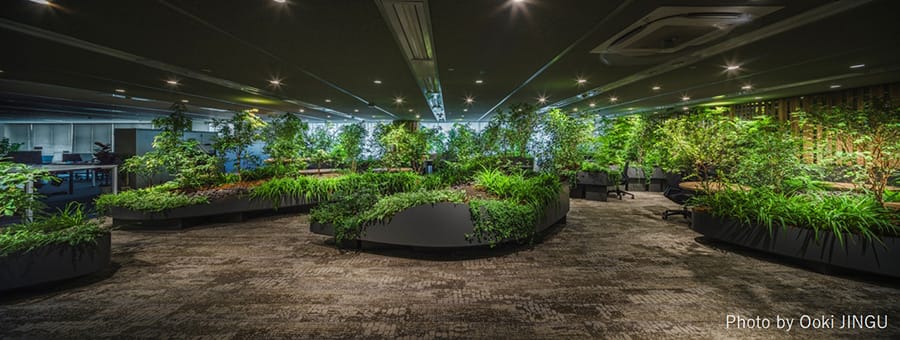
Creating a Workplace Environment That Supports Members
- What triggered your efforts in environmental design?
- Yanagimoto (Project General Manager, BR BEV, Toyota)
- The BEV factory was established in 2023, starting a major challenge to bring next-generation BEVs to market. Members from various departments began daily discussions within the factory, rather than across departments as before. We wanted to create a workplace environment that offers greater mental security than ever before.
- Why did you decide to implement Genki-KûkanTM?
- Yamada (Project Manager, BR BEV, Toyota)
- We had tried spaces with plants, including fake ones, but effects were unclear. Then we learned there was a department conducting scientifically based research on green spaces (Genki-KûkanTM) within Toyota. After experiencing the space firsthand, we felt, "This is it!"
- What did you focus on in creating the space?
- Uchihara (BR BEV, Toyota)
- First, we prioritized creating a space where members can relax. We also considered an environment that allows concentration on projects even during busy times. Incorporating the Frontier Research Center's research on relaxation and concentration effects is expected to enhance creativity.
Starting the Space Creation Amid Anxiety and Heavy Responsibility
- This was the first in-house project applying research results to space design, correct?
- Terada (Frontier Research Center, Toyota)
- Yes, we felt heavy responsibility and anxiety. The space needed to function as both a Genki-KûkanTM research site and a comfortable workspace for members, which presented a significant challenge. By building a collaborative system involving researchers, users, and designers from the Frontier Research Center, BR BEV, and parkERs, we created a space that combines scientific knowledge with usability. Genki-KûkanTM Research investigates relationships between various plant and spatial features and relaxation effects. This project incorporated findings such as the importance of plant density and fractal structures (common in nature) on attention restoration*6, as well as effective leaf shapes*7.
-

- Examples of fractal structures: Snowflake (left), Romanesco (right)
Healing Pathways and Water Sounds
- What design points did you focus on?
- Maeda (Spatial Designer, parkERs)
- The spatial layout was designed to evoke a sense of being enveloped and sheltered, as if becoming immersing deeper into a forest. To achieve this, pots were positioned higher toward the back, creating greater plant density. Inspired by natural fractal structures, branching pathways were designed to allow repeated left-right choices, aiming for a space that induces unconscious relaxation.
- Ichinosawa (Plants Coordinator, parkERs)
- Plants were selected based on their shape, color, texture, and producer-specific training, creating varied impressions along paths and seating areas. The water basin is also a distinctive feature; people are drawn by the sound of water and find comfort in the gentle reflections. Water is an important element providing small-scale mental care.
-
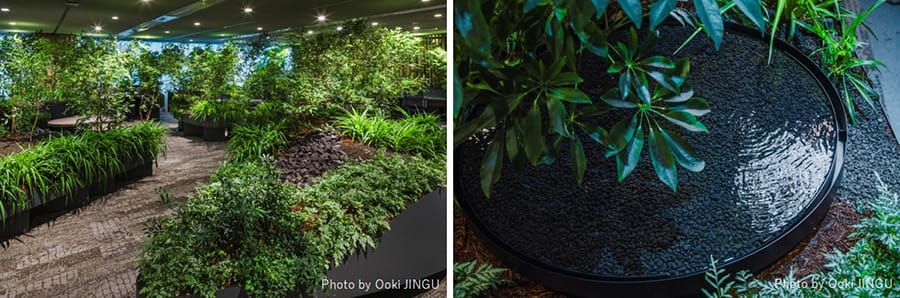
- Photo left: Pathway design
Photo right: Water basin
Changing Workplace Culture with Genki-KûkanTM
- How was it to create the space?
- Yanagimoto
- We created a space surrounded by plants where you can feel calm, concentration, and healing. The water element was surprisingly good as well.
- How did BR BEV members respond?
- Kato (BR BEV, Toyota)
- At first, only a few people used it, but after surveys and improvements by BR BEV and Frontier Research Center, more people use the space now. We hear comments like "It's calming" and "It's relaxing."
Expectations for Genki-KûkanTM Research
- Are there areas you want to improve?
- Yanagimoto
- I want to share the research results with members to increase their interest and usage. We aim to create spaces that foster creativity and productivity based on members' mental security. I'm also interested in the effects of sound on productivity and look forward to future sound research at the Frontier Research Center. We aim to sustain a cycle of initiatives, results, and improvements, creating better spaces for everyone within and outside the company.
-
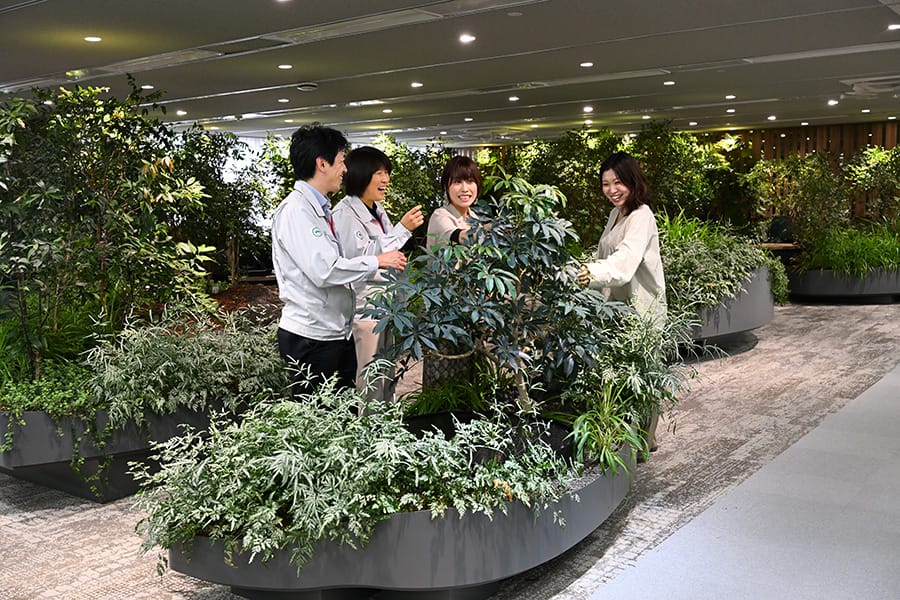
- From left:
Tasuku Yanagimoto (Project General Manager, BR BEV, Toyota)
Kumi Terada (Frontier Research Center, Toyota)
Miwa Ichinosawa (Plants Coordinator, parkERs)
Ai Maeda (Spatial Designer, parkERs)
-
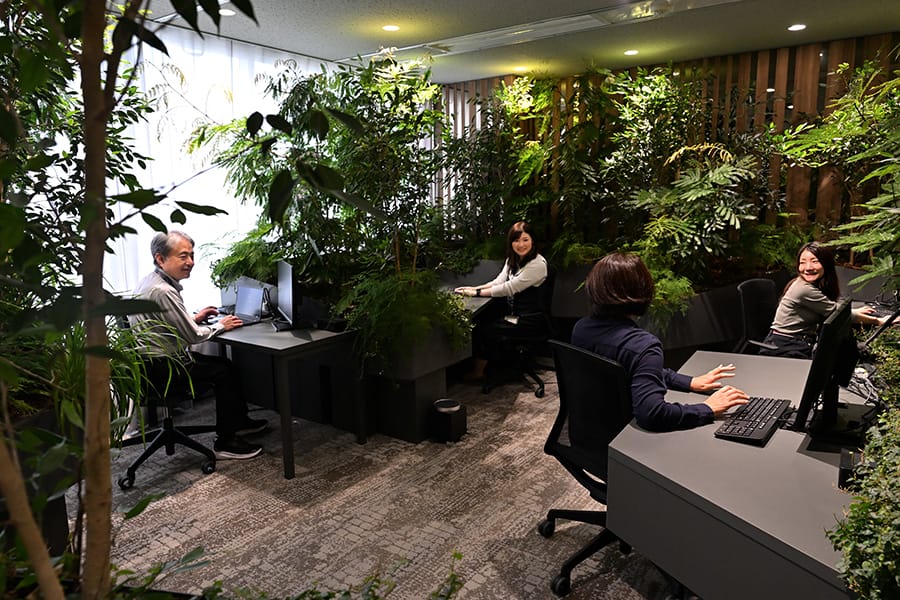
- From left:
Akira Yamada (Project Manager, BR BEV, Toyota)
Eri Uchihara (BR BEV, Toyota)
Rina Kato (BR BEV, Toyota)
Miyoshi Plant
Considering the Well-being of Factory Workers
- What was the motivation for introduction?
- Kimura (General Manager, Plant Support Dept., Manufacturing Engineering Div. Miyoshi Plant / Myochi Plant, Toyota)
- At the start of 2024, the president said, "Let's change the future of cars! For that, I want us to value taking action first." Since people are at the heart of manufacturing, we decided to take action toward a factory that produces happiness and is full of smiles, creating a well-being environment. At that time, Miyoshi Plant was under a high production load, and workers felt fatigue.
- Had any measures been taken previously for employee well-being?
- Kimura
- We increased staff to reduce workload, installed fake plants, and strengthened informal activities to encourage employee communication. However, informal activities held after work or on weekends were becoming less effective for the current generation. In January last year, we asked employees what kind of factory they wanted in a survey, and there were comments about plants.
- Yamashita (Manager, DL Manuf. Section No.22, Driveline Manufacturing Div.2, Miyoshi Plant, Toyota)
- There are many plants on the factory grounds like trees and vegetable gardens, making it green. However, within the factory buildings, the greenery sharply decreases. This may reflect a biological instinct, as seen in the survey responses.
-
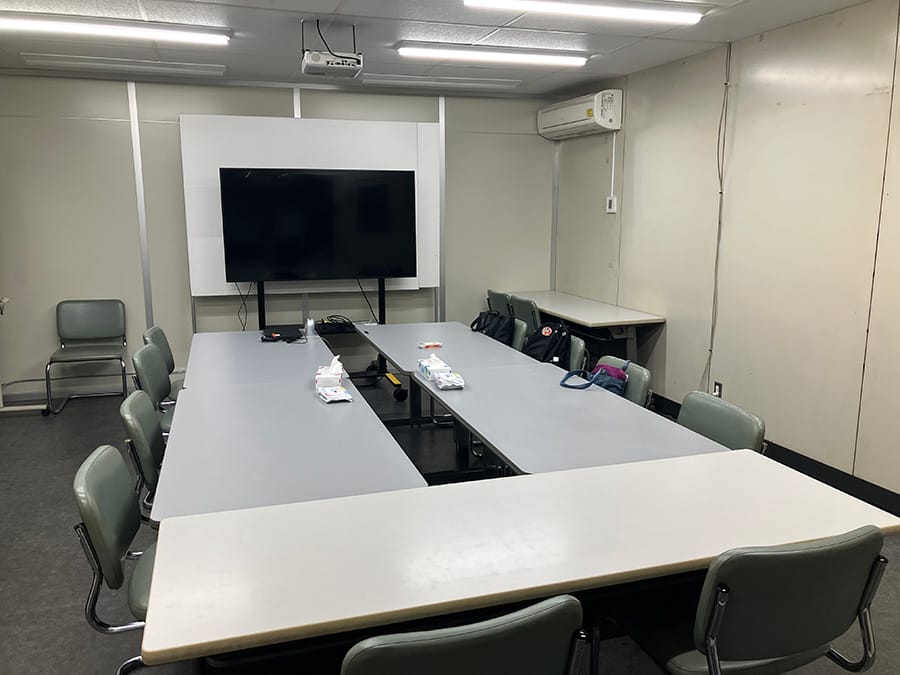
- Communication Room Before Renovation
After renovation, also used as a resting place (gathering spot)
Wanting to Change the Future of Factories
- Why choose Genki-KûkanTM instead of ordinary greenery?
- Kimura
- I knew about Genki-KûkanTM through Masakazu Ito, Research Lead of this project. I was attracted by the fact that this was not just ordinary greening but a scientifically based space design. Although still in the research stage, Miyoshi Plant, with its desire to change the factory's future, wanted to proactively take the lead in implementing Genki-KûkanTM. Miyoshi Plant has a history of adapting production to social needs, making various products flexibly rather than specializing in one. Miyoshi plant has survived many changes, we felt that it should also take the lead in adapting to changes in the factory environment.
First Genki-KûkanTM Inside Factory Building
- What research results from the Frontier Research Center were applied?
- Ito
- At Miyoshi Plant, Genki-KûkanTM was implemented in two places: the office building entrance and the factory building break room. As these spaces have different purposes, we applied leaf shape effect differences*1 accordingly. The office entrance uses "Men" plants to encourage conversations among visitors and employees, while the factory break room mainly features "Ten" plants to help workers refresh.
- What design points did you focus on?
- Yotsukura (Spatial Designer, parkERs)
- Since the office entrance receives visitors, we designed it to function as the company's face. Signage and furniture use natural materials and earth tones to highlight plants and leaf shadows. Lighting plans also considered plant growth.
- Hanada (Plants Coordinator, parkERs)
- "Men" plants include various species. By matching green tones, we mixed many tree species to create a lively impression while maintaining a cohesive planting plan throughout the office entrance. The factory break room includes tree species reminiscent of Japanese rural landscapes to create a familiar, soothing environment with Ten plants that people can touch and relax with.
-
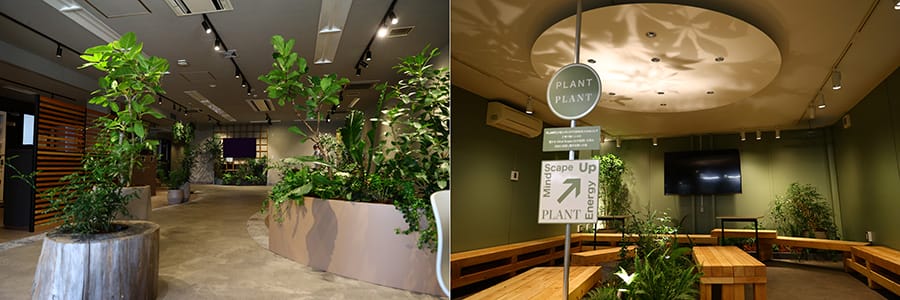
- Photo left: Office building entrance
Photo right: Factory building break room
A Growing Network of Smiles in the Factory
- How was the actual implementation?
- Yamashita
- Initially, the green rest area, Genki-KûkanTM, inside the factory building felt unusual and strange to me. But that feeling quickly disappeared as I became captivated by the scent of soil and plants. Now, it is an indispensable part of the space.
- Kimura
- The office entrance Genki-KûkanTM seems to have increased conversations and smiles among employees. It really helps activate communication. Visitors also engage in conversations about Genki-KûkanTM; some even ask, "Can I work here?"
- Miyashita (Project Manager, Plant Support Dept. Manufacturing Engineering Div. Miyoshi Plant / Myochi Plant, Toyota)
- We aimed for a space where people feel "somehow calm and want to stay longer," carefully selecting furniture and creating atmosphere. I personally spend more time at the entrance now. Real plants have a strong healing effect, but maintenance requires effort and cost, so understanding from people around is important. Therefore, we communicate daily about the beauty of plants such as new leaf growth and shadows to help many know the comfort of this space. Unexpectedly, some workers said the smell of processing oil lingering indoors after holidays bothers them less now.
-
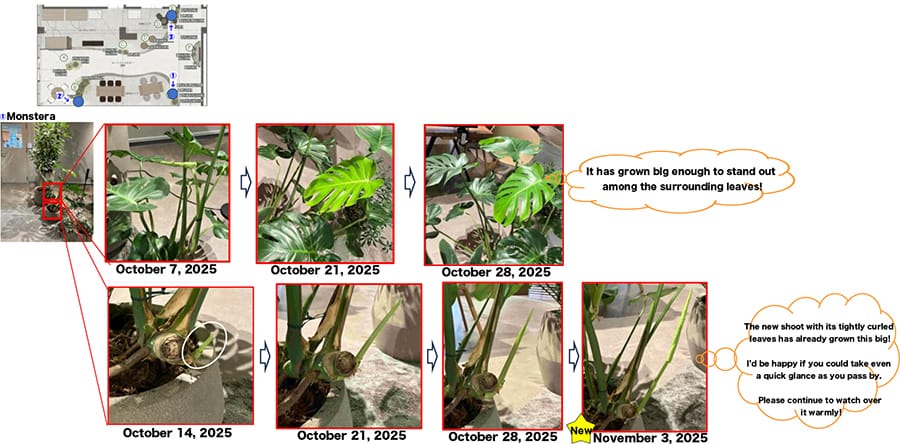
- Example activities to promote the beauty of plants
Expectations for Genki-KûkanTM Research
- What are your expectations for the future of Genki-KûkanTM Research?
- Yamashita
- I'm interested in how people perceive the effects of environmental sounds and leaf shapes.
- Miyashita
- The quality of space depends on the total balance of greenery, acoustics, lighting, interior, and wallpaper. It would be great to simulate these effects, including the investment and maintenance costs.
- Kimura
- I'm curious about the effects of scents, such as the fragrance of flowers. This time we used only plants to study their effects in isolation, but I would like to try adding aroma oils as an upgrade. Going forward, I hope that what was shown to be effective at Miyoshi Plant will be extended to other plants, offices, and regions. I look forward to spaces designed for the coexistence of people and nature becoming commonplace.
-
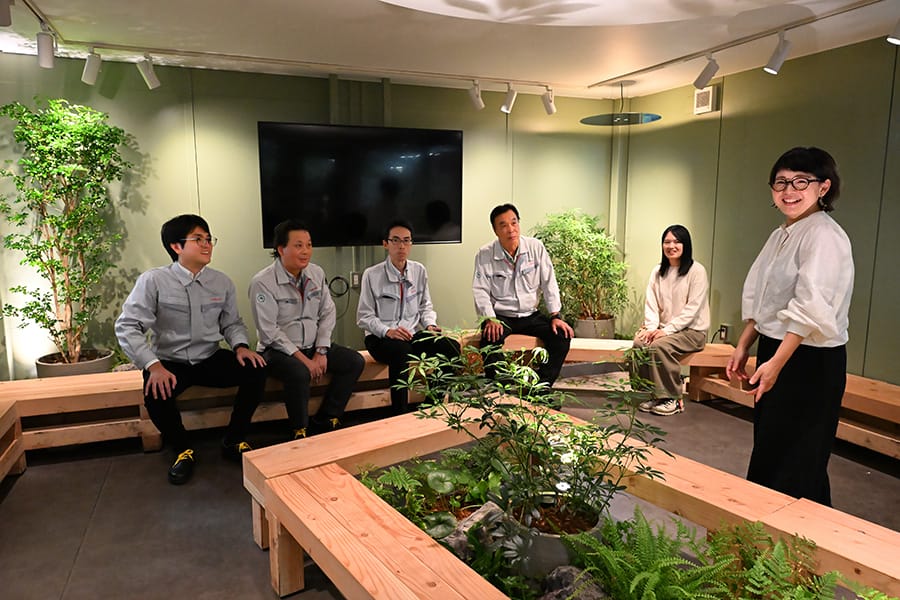
- From left:
Kodai Ito, Assistant Manager, Frontier Research Center, Toyota
Tomoyuki Miyashita, Project Manager, Plant Support Dept. Manufacturing Engineering Div. Miyoshi Plant / Myochi Plant, Toyota
Yoji Kimura, General Manager, Plant Support Dept., Manufacturing Engineering Div. Miyoshi Plant / Myochi Plant, Toyota
Motohiro Yamashita, Manager, DL Manuf. Section No.22, Driveline Manufacturing Div.2, Miyoshi Plant, Toyota
Miharu Hanada, Plants Coordinator, parkERs
Yuko Yotsukura, Spatial Designer, parkERs
References
Behind the Scenes: Creating Genki-KûkanTM Spaces
- BR BEV Office
- The Office Building Entrance, Miyoshi Plant
- The Factory Building Break Room, Miyoshi Plant
Contact Information (about this article)
- Frontier Research Center
- frc_pr@mail.toyota.co.jp
RELATED CONTENT
MOST POPULAR